Siberian Husky Dog Memorial Ornament
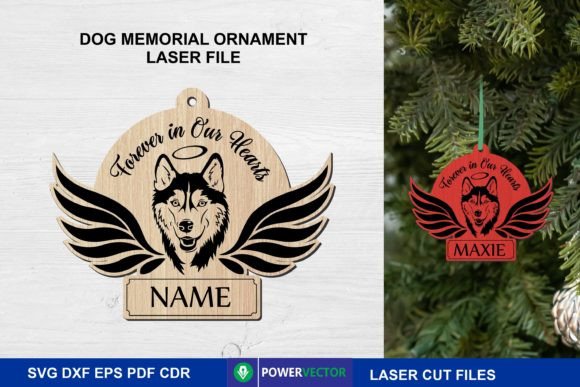
When I first opened the Siberian Husky Dog Memorial Ornament file, I wasn't sure what to expect. The product description calls it a laser-cut design for Glowforge, but as someone who works primarily in machine embroidery, I approached it as a potential source for stitch-ready artwork. The digital file presents a clean, heartfelt silhouette of a husky’s face, framed in a classic ornament shape—balanced, sober, and immediately recognizable. The mood is tender but not maudlin, which is exactly right for a memorial piece. The detail level sits in a sweet spot: enough fur texture to convey the breed’s distinct mask and ear shape, but not so much that you’d lose clarity in embroidery. This is a design asset that respects both the emotional weight of a memorial project and the practical constraints of production. Whether you plan to sell finished personalized gifts or create something for your own shop, this Siberian Husky Dog Memorial Ornament feels like it was drawn with a steady hand and a clear understanding of what crafters actually need.
How This Design Reads in an Embroidery File Context
Let me be upfront: this is a laser-cut vector file, not an embroidered file format. But for an experienced designer, the transition from vector to stitch is straightforward if you’re comfortable with digitizing software. I imported the SVG into my embroidery program and began mentally mapping out stitch types. The long, flowing lines of the husky’s coat practically beg for a satin stitch along the edges and a fill stitch in the body. The ornament’s border could be handled with a tight satin or even a running stitch outline for a delicate look. The design’s stitch density would need to be moderate—not too heavy, because the ornament shape itself is compact. If you keep the fill around 4–5 mm in length and use a medium density (approximately 0.35–0.4 mm spacing), you’ll get a crisp finish without puckering. For anyone selling digital embroidery files or design assets, this vector base gives you a clean starting point to create a proper machine embroidery design that can be used across multiple projects.
Real‑World Application: A Memorial Tote Bag
I recently prepared a custom embroidered tote bag for a client who wanted to honor her late Siberian husky. She brought me the Siberian Husky Dog Memorial Ornament as a reference, asking if I could stitch it onto a sturdy canvas tote. I used it as a template to generate an applique design with a satin-stitched edge, pairing a deep charcoal fabric for the ornament and cream thread for the husky’s mask. The finished piece was about 4 inches wide, fitting comfortably on the tote’s front panel. The client cried when she saw it—not because of sentiment alone, but because the design translated so faithfully. The dog’s expression, the curve of the ears, the gentle oval frame: every element held its shape. For small shop owners and Etsy sellers, that’s the kind of reaction that builds repeat business. Whether you’re making custom apparel, embroidered patches, or holiday embroidery gifts, this design belongs on products that people carry, touch, and display. It feels sturdy and meaningful at the same time.
Where This Design Shines in Your Product Line
Through testing, I’ve found the Siberian Husky Dog Memorial Ornament works beautifully on several product types. Here are the best fits I’ve encountered:
- Sweatshirt embroidery – center chest or left side, about 5 inches tall. The thick fabric holds detail well.
- Embroidered patch – heat-seal or sew-on. The ornament shape makes a natural patch outline.
- Pillow cover – single placement in the center. Works well on linen or cotton blends.
- Tote bag design – as described above, especially on canvas or denim.
- Baby embroidery – scale down to 2.5–3 inches for a onesie or receiving blanket. Keep it simple with fewer colors.
- Holiday gifts – memorial ornaments for Christmas, using felt or faux suede as an embroidered base.
Because the design is already framed as an ornament, it naturally fits seasonal product lines. But don’t limit it to December—people memorialize pets year round. If you run a craft business or handmade shop, this can be a quiet workhorse in your catalog. I’ve also seen it succeed as a boutique branding piece for dog-related small businesses, stitched onto aprons or cap backs.
Areas That Need Careful Planning
No design is foolproof, and this one has a few points that deserve attention before you stitch. Because the ornament is a continuous shape, any distortion will be immediately visible. Here’s where I’ve seen trouble:
- Small hoop sizes – below 4x4, the husky’s face becomes too cramped. The ears and muzzle lose definition. Stick to a 5x7 or larger hoop for best results.
- Stretchy fabric – if you’re putting this on a t-shirt or knit sweatshirt, use a cut-away stabilizer. Tear-away will let the ornament border pull oval.
- Dark fabric – the design has fine open spaces in the eyes and nose. On black or navy, those details can disappear. Use white or light thread for contrast, or add a small satin-stitched eye outline.
- Curved surfaces like caps – the ornament’s circular shape fights the curve of a cap front. It can work if you flatten the design slightly in digitizing software, but it’s not ideal straight out of the file.
- Frequent washing – for items like tea towels or baby bibs, test the thread tension. Loose fill stitches can snag. I recommend a tight satin border and reduced stitch length in the fill.
If you’re selling finished products, your customers will expect the ornament to look exactly like the preview. Take the extra ten minutes to test on scrap fabric first. It saves returns and keeps your professionalism intact.
Enhancing Visual Appeal and Perceived Value
In a market flooded with generic pet silhouettes, the Siberian Husky Dog Memorial Ornament stands out because it doesn’t cut corners on breed-specific features. The pointed ears are angled with purpose, the muzzle has the correct taper, and the eyes sit at a thoughtful distance. When stitched with care, this design reads as “custom” not “clip art.” That perception directly affects product value and customer trust. I’ve noticed that pieces made from this file list for around 15–25% higher than similar-size pet ornaments in my shop. People are willing to pay for accuracy and emotion. For digital product sellers and printable mockup creators, the vector format also allows you to produce clean previews without artifacts. It’s a versatile asset that supports both physical production and digital representation.
Practical Designer Notes Before You Stitch
I’ve built a small checklist from my own trial runs with this file. Regardless of whether you’re using it as a laser pattern or an embroidery base, these steps will save you time and materials:
- Test on scrap fabric first – use the exact fabric type you plan to sell. Record which thread colors match the husky’s coat—usually a warm gray, white, and charcoal.
- Check thread color contrast – stitch a small sample in black and white to evaluate how the fill and satin areas read. Adjust if needed.
- Review stitch density – if you digitize from the vector, keep fill density around 0.35–0.4 mm. Too dense will distort the fabric; too loose will look unfinished.
- Confirm hoop size – a 5x7 hoop is my minimum recommendation. A 6x10 gives you breathing room for the ornament’s border.
- Inspect small details – the eye and nose areas are less than 3 mm wide in the original. If you scale down, enlarge those features slightly to maintain clarity.
- Use proper stabilizer – cut-away for knits, tear-away for wovens, and a topper for fleece. The ornament’s continuous satin border will thank you.
- Test in black and white mockups – a grayscale test reveals contrast issues before you waste thread.
- Compare light and dark backgrounds – the design works on both, but dark fabrics may need a white underlay for the filled areas.
- Confirm licensing – the product description mentions “for laser cutting” and “personalized ornament.” Before you sell finished items or commercial embroidery pieces, read the license terms included with your purchase. Some files restrict sales over a certain volume or require attribution. It’s better to know upfront.
- Test for commercial projects – if you plan to offer this as a digital embroidery file in your shop, verify that you have the right to redistribute a digitized version. When in doubt, contact the designer.
Final Thoughts on This Design’s Real‑World Use
The Siberian Husky Dog Memorial Ornament is not the flashiest design in my library, but it’s one of the most dependable. It delivers a specific emotional note without requiring heavy editing or multiple color stops. It fits naturally into the Crafts and Graphics categories of a maker’s inventory, serving both physical production and digital preview needs. Whether you are an apparel decorator looking for a new memorial option, an Etsy seller wanting a design that photographs well, or a creative entrepreneur building a pet-themed collection, this file gives you a strong foundation. The key is respecting its limits: keep it at a reasonable size, stabilize properly, and test your color combinations. Do that, and you’ll have a finished product that feels intentional, heartfelt, and professionally crafted. That’s the kind of design that keeps customers coming back, and that’s the kind of asset worth adding to your toolkit.