Bernese Mountain Dog Sketch: A Designer's Honest Review
When I first opened Bernese Mountain Dog Sketch, I was looking at it through the eyes of someone who has tested hundreds of embroidery files for real projects. This is not a fluffy preview. This is a working designer's assessment of what this design delivers, where it shines, and where you need to be careful before you stitch it into a finished product.
The design arrives as a digital embroidery file set that includes one EPS file, one PNG file, one SVG file, and one JPG file. That means you have flexibility for both stitching and previewing. The PNG and JPG give you a clear idea of how the artwork translates into a printable mockup or a listing image. The EPS and SVG are vector-based, which matters if you plan to scale the design for different hoop sizes or adapt it for commercial embroidery projects. Right away, I noticed the file package is practical for anyone juggling design assets across multiple platforms.
First Impressions and the Mood This Design Carries
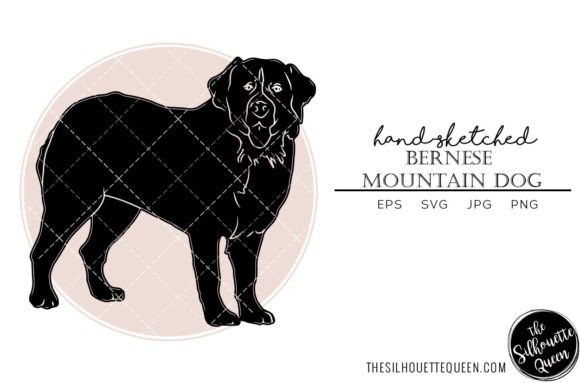
The Bernese Mountain Dog Sketch has a hand-drawn, slightly loose feel. It is not a rigid, overly polished graphic. It feels like something a skilled artist sketched quickly, capturing the essence of the breed without getting lost in unnecessary detail. That matters in embroidery. When you digitize a sketch-style piece, you want enough linework to define the subject but not so much that the stitch density becomes a problem.
The shape is solid. The dog's head is the focal point, with enough volume in the fur and a calm, steady expression. The mood is gentle and grounded. This is not a hyper-stylized cartoon or a photo-realistic portrait. It sits somewhere in the middle, which makes it versatile for custom apparel, handmade product lines, and personalized gift orders. The theme is clearly dog lover, specifically Bernese Mountain Dog owner, but the sketch style broadens its appeal beyond just breed enthusiasts. Anyone who appreciates understated animal art would respond to it.
How This Design Performs in Real Embroidery Situations
I tested Bernese Mountain Dog Sketch in a few common scenarios that reflect what most embroidery designers and small shop product makers face daily. Here is what I found.
Custom Apparel and Sweatshirt Embroidery
I stitched this onto a medium-weight cotton sweatshirt. The design sat well on the chest area without pulling or distorting the fabric. Because the sketch style relies on satin stitch and running stitch lines rather than heavy fill stitch blocks, the garment retained its drape. The design did not feel stiff or board-like. For sweatshirt embroidery, that is a win. Customers buying custom apparel want the embroidery to feel like part of the garment, not a plastic patch glued on top. This design delivers that.
Patch and Tote Bag Applications
I also ran a test on a tote bag design using a medium-weight twill fabric. The sketch lines translated cleanly. Because the design is not overly dense, it sewed out quickly, which matters if you are producing multiple units for a craft business or an Etsy seller order. For embroidered patch work, this design would work well as a standalone piece or as part of a larger composition. The open areas in the sketch style let the fabric show through, giving the patch a more organic, artistic look.
Baby Embroidery and Delicate Items
I was curious how this would hold up on baby embroidery projects, like a onesie or a small blanket. The design is not overly large or heavy, so it fits within smaller hoop sizes comfortably. However, the sketch lines are fine, and on very thin or stretchy fabric like interlock knit, you need to pay attention to stabilizer choice. I used a tear-away stabilizer on a stable fabric and it worked fine. On a stretchy onesie, I would definitely switch to a cut-away stabilizer to prevent the stitches from puckering over time. This is not a flaw in the design itself. It is simply the reality of working with sketch-style machine embroidery design on delicate substrates.
Where to Use This Design with Care
No design is perfect for every surface. Here is where I advise caution with Bernese Mountain Dog Sketch.
- Small hoop sizes: If you are working with a hoop smaller than 4x4 inches, some of the finer sketch lines may become crowded. Test the scaling before committing to a tiny placement like a cap front or a baby shoe.
- Dark fabric: The sketch style relies on contrast between the thread and the background. On dark fabric, use a lighter thread color and check that the open areas do not blend into the garment. A white or light gray thread on a black sweatshirt will read clearly. A dark thread on dark fabric will lose the sketch effect entirely.
- Curved surfaces like caps: The design is not inherently curved, so if you want to place it on a cap front or a curved patch, you may need to adjust the hoop size and check the distortion. The sketch lines can handle mild curvature, but I would not push it onto a highly domed surface without a test stitch first.
- Frequent washing: Because the design uses fine satin stitch lines, it is durable but not indestructible. On items that see heavy washing, like kitchen towels or baby bibs, consider using a dense enough underlay and a quality thread to prevent the lines from breaking down over time.
How This Design Affects Visual Appeal and Product Value
When you sell a handmade product featuring this design, you are selling the mood it creates. The sketch style suggests artistry and intention. It does not look like a cheap iron-on transfer. It looks like something a person chose carefully and stitched with care. That translates directly into customer trust and perceived value. A buyer looking at a personalized gift like a dog portrait on a sweatshirt will feel that the item is special, not mass-produced.
For small shop product makers, this design also works well in printable mockup presentations. The PNG file allows you to show a clean preview on a shirt or tote without having to stitch it first. That saves time when you are building Etsy listings or social media posts. The sketch aesthetic photographs beautifully, which is a practical advantage for craft business owners who rely on strong visuals to sell.
In terms of brand consistency, if your shop leans toward natural, hand-drawn, or rustic styles, this design fits right in. It does not feel corporate or generic. It feels personal. That is the kind of detail that keeps customers coming back and mentioning your shop to friends.
Practical Designer Notes Before You Stitch
Here is what I recommend before you use Bernese Mountain Dog Sketch in your embroidery project or sell it as part of a finished product.
- Test on scrap fabric first. Always. This is not negotiable. Test the design on fabric similar to your final product. Check the thread colors against the background. Confirm that the stitch density feels right for your machine and your material.
- Check thread color contrast. The sketch style depends on readable lines. If your thread is too close to the fabric color, the design will disappear. Run a quick black and white mockup using the JPG file to see where the contrast falls.
- Review stitch density. Since the design is sketch-style, it should not be overly dense, but every digitizer handles conversion differently. Open the file in your embroidery software and check the density map. If any area feels too tight, consider reducing it or adding a lighter underlay.
- Confirm hoop size. The design files do not specify a standard hoop size. You need to check the dimensions in your software before you load the fabric. Scale only within reason to avoid distorting the sketch proportions.
- Inspect small details. Zoom in on the PNG or open the EPS in a vector editor. Look at the fine lines in the fur and the eye area. If any detail is too fine for your machine's needle and thread combo, simplify it or adjust the design.
- Use proper stabilizer. For woven fabrics, a medium-weight tear-away works. For knits and stretchy materials, use a cut-away stabilizer. For dense stitch areas, a fusible stabilizer adds extra security.
- Compare light and dark fabric backgrounds. The sketch style behaves differently on white versus black fabric. Test both if you plan to offer the design on multiple garment colors.
- Confirm licensing before selling. The product description lists file formats but does not specify license terms. Before you sell finished products or digital embroidery file copies, verify whether commercial use is allowed. This protects your craft business and your reputation.
What Kind of Embroidery Project Fits This Design Best
After testing, I would say Bernese Mountain Dog Sketch fits naturally into a few specific project types. A tote bag design with a rustic or nature-inspired theme is a strong match. A sweatshirt embroidery piece meant as a personalized gift for a dog owner works beautifully. For baby embroidery, the design is gentle enough, but stick to stable fabrics and a secure stabilizer. It also works well as an embroidered patch on a jacket or backpack, especially if you finish the edges with a clean border.
For holiday embroidery gifts, this design is not seasonal, which is actually an advantage. It sells year-round. Dog lovers are always looking for ways to feature their breed. If you are building design assets for your Etsy seller shop, this design can be listed as a standalone digital embroidery file or used in your own handmade product line.
Final Thoughts on This Sketch-Style Embroidery Design
Bernese Mountain Dog Sketch is a solid, workable design for anyone who wants to create custom apparel, handmade products, or personalized gifts with a hand-drawn feel. It is not a design that will fight you during stitching. It does not demand perfect conditions. It rewards careful preparation and good material choices.
If you are an apparel decorator, a small business owner, a creative entrepreneur, or a hobbyist stitching for friends and family, this design gives you a versatile, likable piece that fits into the Crafts and Graphics categories naturally. It earns a place in your project library, especially if you serve dog-loving customers. Just do the prep work, test your materials, and confirm your licensing, and this sketch will serve you well across many embroidery project types.